“He who dwells in the secret place of the Most High shall abide under the shadow of the Almighty.” — Psalm 91:1
The dream came for the first time on a Sunday night, which Akosua Frimpong would later say was no accident, because the enemy likes to visit exactly when a person feels safest.
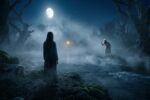
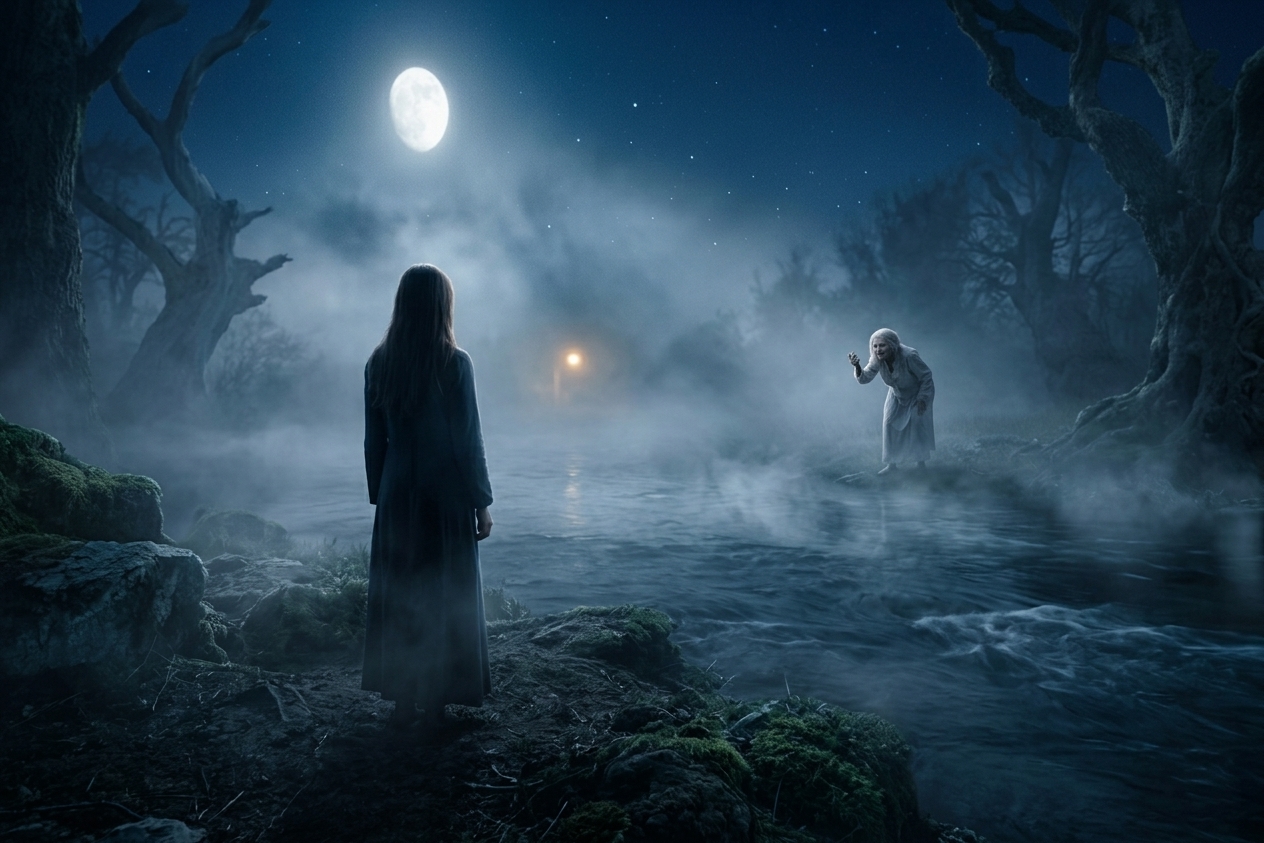
In the dream, she stood at the edge of the river behind her grandmother’s house in Ejisu, and a woman in a white cloth stood on the other bank, calling her name in a voice too sweet to belong to anyone living. “Akosua. Come. I have been waiting since before you were born.”
She woke up gasping, the 3am darkness pressing against her like a hand over her mouth.
She told no one. A grown woman, twenty-six years old, a bank teller at the Ejisu branch with a good job and a good church attendance record, does not run to her pastor over one bad dream.
But the dream returned the second night. And the third. Each time, the woman in white stood a little closer to the water’s edge, and each time, Akosua woke at exactly 3:03am, heart slamming, throat dry as if she had actually been shouting across a river in her sleep.
By the fifth night, she had stopped sleeping with her light off.
By the sixth, she called her grandmother.
“Ejisu,” her grandmother said, and Akosua could hear the old woman’s breath change on the other end of the line, the particular stillness of someone choosing her next words very carefully, “you never asked me about the river before.”
“Grandma, what is happening to me?”
A long silence. Then: “Before your mother became a Christian, before I became a Christian, this family made a covenant at that river. Your great-grandmother promised the river spirit that the first daughter of every generation would come to the water on her own accord, when the spirit called. Your mother broke the pattern when she gave her life to Christ. I thought the covenant died with her decision. I did not know it could reach forward to you.”
Akosua’s hands went cold around the phone. “Seven nights. It said something about seven nights.”
“Then tomorrow is the seventh,” her grandmother whispered. “Akosua, do not sleep alone tomorrow. Call Pastor Owusu. Call him tonight, not tomorrow. Some doors, once they open fully, do not close again on their own.”
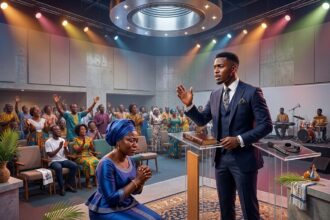
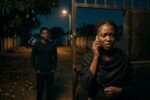
Pastor Owusu of Ejisu Miracle Chapel was not a man given to drama. He had built his ministry on quiet, steady faith — visiting the sick, praying with the broke, refusing to charge a cedi for deliverance the way some of the newer prophets in town had taken to doing. When Akosua called him at nine that night, voice shaking, he did not laugh, and he did not hesitate.
“Come to the church now,” he said. “Bring your grandmother on the phone if she cannot travel. We will not wait for midnight to find you unprepared.”
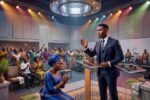
By eleven, six of them sat in a circle inside the small block chapel — Pastor Owusu, two elders, Akosua, her cousin Yaa, and her grandmother’s trembling voice on speakerphone from Kumasi, confessing sins that were older than Akosua’s own birth, breaking a covenant sealed at a riverbank two generations before deliverance had a name Akosua would ever learn in Sunday school.
At exactly 2:50am, ten minutes before the dream usually came, Akosua felt it — not sleep, but something like sleep’s cousin, a heaviness pressing down on her eyelids with a weight no tiredness should carry after three cups of Nescafé and an hour of hymns. Her body wanted the dream. Something in her blood was already walking toward that river even while her feet stayed planted on the chapel floor.
“Hold her hands,” Pastor Owusu said quietly to the elders, and to Akosua, gently: “You are not walking to any river tonight. Say it. Say it out loud so your own ears hear it too.”
Her mouth felt like it belonged to someone else. The pull toward sleep was enormous, patient, almost kind, the way a river current is kind right up until the moment it isn’t. Somewhere behind her closed eyes she could already see the white cloth, closer now than it had ever been, close enough to see the woman’s face for the first time — and the face, God help her, looked like her own, aged forward forty years, waiting on that riverbank with the terrible patience of something that has already waited two full generations and can certainly wait one night more.
“I did not make that covenant,” Akosua forced out, and her voice cracked but did not stop. “My great-grandmother made it before I was born, without my consent, and I did not inherit her promises. I belong to Christ. My blood answers to no river.”
The heaviness did not leave quietly. It left the way a stubborn tenant leaves a house — slamming a door somewhere unseen, one last surge of cold pressing through the room so hard that the chapel’s single bulb flickered twice — and then, all at once, it was simply gone, the way weather clears after a storm nobody quite remembers building.
Akosua opened her eyes to find Pastor Owusu already praying thanksgiving over her, the elders’ hands still gripping hers so tightly her fingers had gone numb, and her grandmother, still on speakerphone from Kumasi, weeping the particular relieved weeping of a woman who has just watched a debt she incurred decades ago finally get cancelled by somebody else’s faith.
The dream never returned. Not on the eighth night, not on any night after.
Akosua tells the story now only when someone needs to hear it — usually a younger cousin frightened by a dream they cannot explain, or a stranger in a testimony service who catches her eye at the word “river” and looks like they might understand exactly why. She tells them what her grandmother told her that sixth night, the sentence she has never stopped turning over since:
Some doors, once they open fully, do not close again on their own. But no door, however old, however patiently it has waited, outlasts the name of Jesus spoken by someone who finally knows they have the right to say it.
THE END